The W Trek, Torres del Paine: What to Know Before You Go
There are treks you do for the scenery, and treks you do for what the journey draws out of you.
The W Trek in Torres del Paine sits firmly in both categories. It’s famous, yes - but it’s also demanding enough to give you the satisfaction of completing a real challenge , structured enough to feel safe solo, and stunning enough to remind you just how amazing Planet Earth truly is.
In this post I will try to answer many of the common questions and give you insight into the things I wish I had known before I left for the hike.
But before we get into the nitty gritty - the all important question…
Is it worth the expense and travel time to arrive at the starting line?
Yes - absolutely.
I had seen all the pictures before I left. I thought I broadly knew what to expect. But the camera doesn't capture all the highlights...
Waking up in a tent to nothing but the sound of glaciers calving on the mountains, birds chirping and streams running nearby;
Sharing trekking stories over a game of cards and a bottle of wine with other solo trekkers you keep bumping into en route; and
Opening your flask or packed lunch sat at one of the many viewpoints on the trails, taking a deep breath, realising you are truly in one of the most stunning places on planet Earth.
TIP: Don’t overlook these incredible day hikes nearby. I would rate them on a par with the W-Trek. Many are free or nearly free. I used them as warm-up hikes before the W-Trek and I am certain as a result I was better adapted to the altitude and the long days than many of the other hikers as a result. If you have the time, combining them with the W Trek in Torres Del Paine makes for an incredible journey.
What is the W Trek?
The W Trek is a multi-day hike in Torres del Paine National Park, in Chilean Patagonia. The name comes from the shape of the route, which branches into three valleys forming a “W”.
Over 4–5 days, the trek takes you to:
Base Torres (the iconic granite towers)
Valle Francés (a dramatic glacial valley)
Grey Glacier (part of the Southern Patagonian Ice Field)
You hike between refugios and / or campsites, staying overnight along the route. It’s considered moderately challenging — not technical, but physically demanding due to distance, elevation, and famously unpredictable Patagonian weather.
Can I do it solo or should I use a guide?
Yes, you can absolutely do the W Trek ‘solo’.
I say ‘solo’ because, in truth, you are never really alone. Around half the people doing the W Trek at the same time as you will be doing the same route (West to East or East to West) - you will meet others along the trails and at the refugios / campsites after completing each day's hike.
Doing the trek without a guide allows you to move at your own pace, rest when you need, and experience the contrasts of Patagonia on your own terms. The trails are well-marked and easy to navigate. And, for me at least, it only added to the sense of adventure in completing the trek.
That said, some solo hikers choose a guide for:
Glacier hikes or optional technical excursions
Logistics support (booking transfers, catamarans, meals)
Extra reassurance in high-wind or poor-weather conditions
Time of year - The National Park requires that you trek with a guide during the winter months from May through September.
This article will mainly focus on practicalities related to completing the W-Trek without a guide.
What do you need to book in advance?
Planning is essential because accommodation inside the park sells out months in advance. I booked my accommodation is July 2025 for a January 2026 booking and already some of the campsites were sold out.
Below I have detailed all you need to know and do in advance of completing the W Trek.
Step 1: Decide your direction and duration
You can either hike West to East (Grey -> Torres) or East to West (Torres -> Grey). I went West to East, and along the way I met several people trekking East to West — naturally, we compared notes over a few glasses of wine. Neither direction is “wrong,” but here’s what we collectively observed:
West to East
Pros: The only way to see Base Torres (aka the ‘towers’) at sunrise. Staying at Chileno campsite on your final night allows you to hike up to the towers before dawn. If you’re lucky with clear weather, seeing the alpenglow slowly appear on the towers is unforgettable - a genuine highlight. Besides the sunrise at the Towers, in general going West to East means you are completing the longer, harder days first (ascent to the Towers aside).
Cons: Day 1 logistics can be tricky. After disembarking at Pudeto around 11am, rangers informed me the trail would close at 4pm due to safety — the suspension bridges over Grey Glacier would be off-limits if you started late. Some trekkers ignore the rules, but they exist for a reason: Patagonian winds can be violent, and being caught out late can be dangerous.
East to West:
Pros: You get the steep climb to Base Torres out of the way on day one while your legs are fresh and you are not clambering over large rocks in the dark to get there. Some of the legs, for example the stretch to Mirrador Britannico, are easier (shorter uphill climb) going East to West.
Cons: You miss sunrise at the towers unless you add an extra night. Don’t get me wrong though the views of the towers in daylight are also stunning. The final days can be long and tiring, especially the trek to Grey Glacier if you plan to return the same day.
Tip: Both directions provide incredible views. Choose based on your priorities: sunrise at Torres vs. a gradual build-up of effort. Personally, West to East rewarded me with the iconic sunrise, and I wouldn’t trade that memory.
Four vs. Five Days:
The W Trek is doable in 4 days but Day 1 may feel short if ferry schedules restrict timing (if going W to E). If you have extra time, 5 days allows exploration around Grey Glacier — kayaking, short hikes, and photography. The decision comes down to personal pace and available time.
Step 2: Book your accommodation
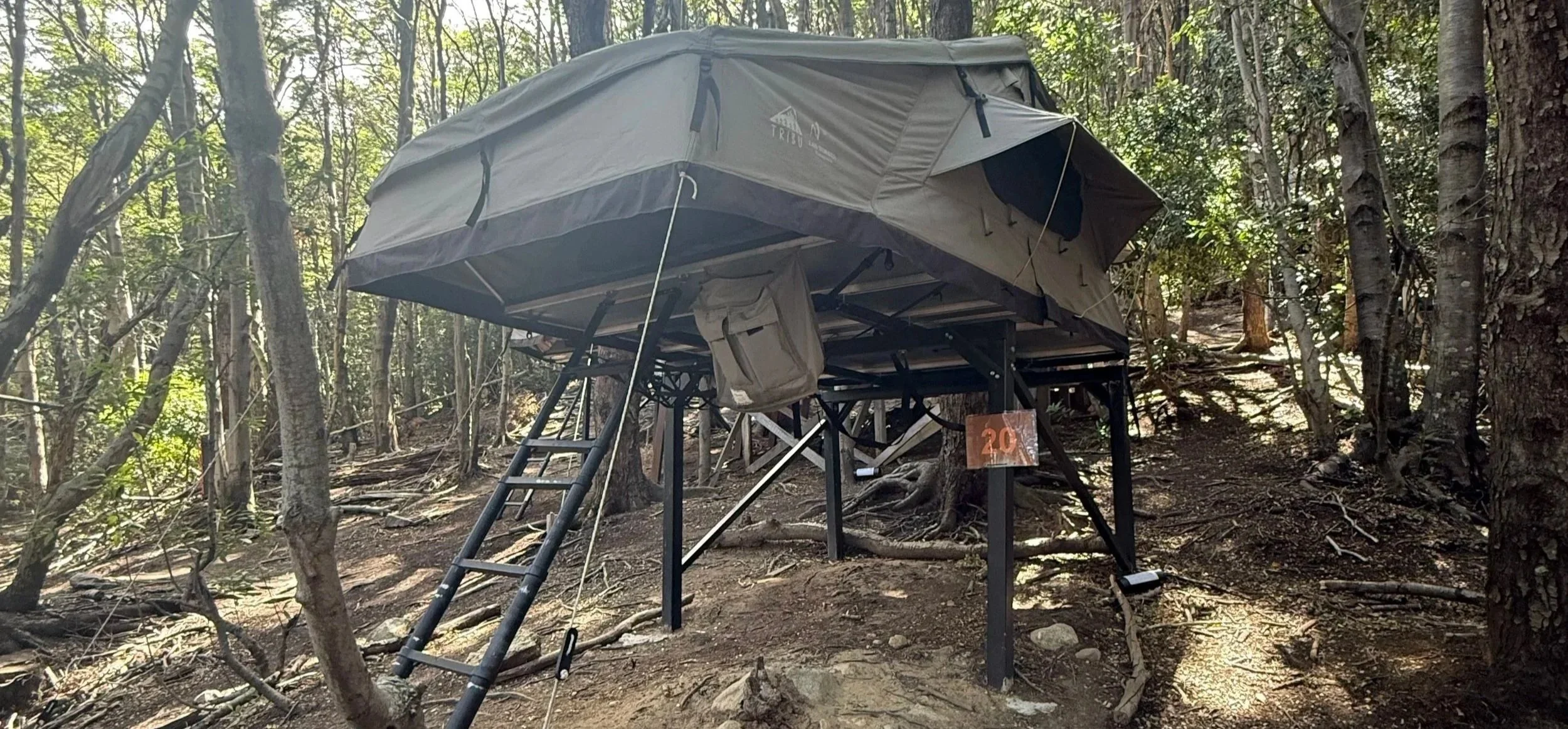
Frances Campsite, Torres del Paine
This is the most time-consuming part, as availability dictates your itinerary.
You can either book:
Refugios (dorms or private rooms), or
Campsites (either self-equipped or renting equipment directly from the refugio / campsite)
Personally, I opted for pre-pitched tents and I carried my own sleeping bag etc. This is really a personal cost vs. comfort decision. I would note though that if you choose to bring your own tent, make sure it is suitable for the Patagonian winds - I saw more than one broken tent during my time on the W-Trek!
As of January 2026, approximate costs per night of each accommodation option:
Dorm Room: $43-105
Camping Spot (no equipment): $14-$110
Camping Spot (pitched tent and mat only): $220-240
Camping Spot (full camping set-up): $300-340
Accommodation is run by two private companies inside the park, plus CONAF (the park authority). You can book accommodation and camping spots directly on the websites of each provider (Las Torres, Vertice).
However, I would recommend using Torres Hike. It is slightly more expensive as there is a service fee but:
It allows you to book the whole itinerary in one go directly via their website;
Manage queries such as dietary requirements (for me: gluten free meals) across refugios and campsites all in one go; and,
Manage transfers and park entrance fees all from the same booking.
Step 3: Park Entry & Transport
Most solo hikers stay in Puerto Natales (Chile) the night before and take an early bus to the park.
As noted above, if you use Torres Hike, you can book transfers including bus to the park entrance and catamaran to Pudeto if doing West to East.
If you are booking each leg separately, you can book via Bus Sur or BusBud.
How much does the W-Trek cost?
The W Trek is not a budget hike, especially if you’re doing it solo.
Rough cost ranges (per person, as of January 2026):
Park entrance: Ch$46,200 (around $50)
Accommodation (4–5 nights):
Campsites: c. $100-300 per night (see above)
Refugios: $43-105 per night (see above)
Food:
Refugio meals: $68-90 half board (breakfast and dinner)
Transport & catamaran: Bus $17 each way (x2), Catamaran (Pudeto to Paine Grande or vice versa) $30
Is it worth it? In my opinion, yes - you’re paying for a curated experience in a protected park. Although it raises questions of accessibility, higher costs also help control visitor numbers, which preserves the park for everyone.
What to pack for the W-Trek?
Packing for the W Trek is definitely not about packing more but rather about packing right. Patagonia’s weather is famously unpredictable - four seasons in a day isn’t a cliché here - so layering, wind protection, and weight discipline matter far more than having the latest gear.
Below is what I packed and what I’d recommend for a solo trekker:
Clothing: Layers, Not Outfits
Outer layers (non-negotiable):
Waterproof jacket (windproof is essential - rain resistance alone isn’t enough)
Waterproof pants
Warm insulated jacket (down or synthetic)
Mid & base layers:
2–3 moisture-wicking base layer tops
1–2 hiking leggings or pants
Lightweight fleece or mid-layer
Thermal base layer (especially for evenings and early mornings)
Sports bras and underwear (quick-dry)
Other clothing essentials:
Hiking boots - not trainers!
Hiking socks (3–4 pairs; merino is ideal)
Warm hat (beanie)
Sun hat or cap
Neck buff or scarf
Gloves (waterproof if possible)
Camp shoes or sandals
Tip: You will wear the same hiking clothes most days. You can double up base layers as PJs.
Backpack & Hiking Gear
Backpack (50–65L depending on whether you’re camping or staying in refugios)
Rain cover for backpack
Daypack or foldable tote (for sections where you can leave your main pack in a refugio)
Headlamp (essential for early starts, especially Base Torres sunrise)
Optional: Trekking poles (I didn’t use them but most people swear by them for the long days)
Camping Gear (If Not Renting On-Site)
If you’re staying in refugios only, you can skip this section.
Tent
Sleeping bag (rated for cold conditions)
Sleeping mat
Food & Hydration
Refillable water bottle or hydration bladder (Water from streams is generally safe - confirm locally)
Snacks for the trail (high-energy, lightweight)
Electrolytes or hydration tablets
If self-catering:
Lightweight stove
Gas canister (buy locally)
Utensils
Mug
Quick meals (freeze-dried or simple staples)
Essentials & Personal Items
Passport (or copy)
Park entry confirmation
Accommodation bookings
Cash (some refugios accept cards, some don’t)
Phone + portable charger / power bank
Camera (optional)
Sunscreen & lip balm (wind burn is real)
Toiletries (travel size)
Hand sanitizer & wet wipes
Small first-aid kit (painkillers, blister care, bandages, blister plasters)
Earplugs (refugios can be noisy)
What I’d Avoid
Too many clothes
Heavy “just in case” items
Every extra kilo is felt by Day 3.
Final Packing Thought
The W Trek rewards preparation, not perfection. Pack to stay warm, dry, and fueled.